
Fishers City Directory Holdings
The strongest Fishers city directory shelf is spread among the Indiana State Library, Hamilton East Public Library, the Hamilton County Historical Society, and Indiana Memory. The State Library guide confirms two Fishers-specific telephone books, not a continuous annual run. Broader Hamilton County and Noblesville volumes fill some years, but their titles and coverage must be read literally.
| Collection | Years | Where kept | Access |
|---|---|---|---|
| Fishers alphabetical telephone directories | 1955, 1956 | Indiana State Library | ISLI 910 F537 1955 and 1956 |
| Hamilton County directory | 1893–94 | Indiana Memory, State Library | Free page scans online |
| Hamilton and Noblesville directories | 1874, 1907–08, 1920, 1929, 1938, 1948; selected 1965–1992/93 | State Library, HEPL, HCHS | Digital, microfilm, or reading room |
| Local-history companions | Dates vary | HEPL Crossroads | Catalog, databases, consultation |
No official source located a definitive first or last Fishers publication year. An absent year is a shelf gap, not proof that a household left town. Ask staff to check the exact title, edition, call number, and service area before drawing a conclusion.
Crossroads Holds Fishers History
Hamilton East Public Library’s genealogy resources combine city directories with microfilmed newspapers, obituary indexes, cemetery listings, yearbooks, photographs, plat maps, and vertical files. The former Indiana Room began in 1973 and became the Crossroads Discovery Center in 2023. That continuity matters when a name does not appear in a searchable catalog.
The Fishers branch is at 5 Municipal Drive and can be reached at 317-579-0300. Crossroads is at One Library Plaza in Noblesville, telephone 317-770-3236. Published hours are Monday through Thursday 9:00 a.m. to 8:00 p.m., Friday and Saturday 9:00 a.m. to 6:00 p.m., and Sunday noon to 6:00 p.m.; verify before traveling. Other channels include phone, catalog, mail, consultation, classes, and genealogy roundtables.
In-library resources include Ancestry Library Edition and American Ancestors. Cardholders can reach Fold3, HeritageQuest, Newspapers.com, and Archives Unbound remotely. Record the database, reel, title, date, volume, page, and access location so another researcher can reproduce the find.
A Digitized Hamilton Directory
The 1893–94 Hamilton County directory in Indiana Memory is a public-domain compound object published in 1894 by a Noblesville printing firm. It contains citizen and business listings, population notes, court material, schools, churches, vital-event summaries, community groups, and advertisements.
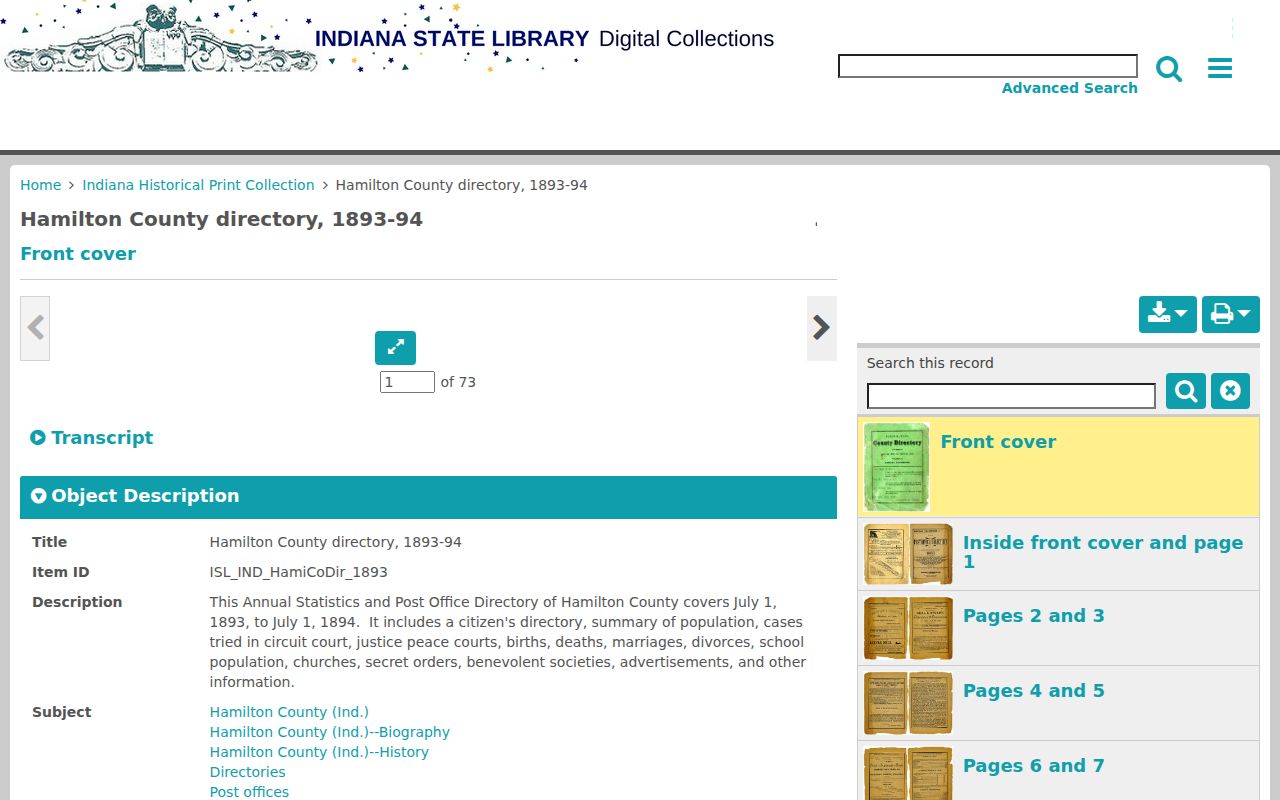
The captured page shows why the scan controls over OCR. The image preserves layout and abbreviations that machine text may misread. Cite both the parent object and page-level link, and state whether the item is a household, business, post-office, or community entry.
Read Fishers Directory Entries
A printed listing records what the publisher gathered at that edition’s date. It may show a full name, spouse in parentheses, trade or business, house number, street, or an owner/renter symbol. The Hamilton County Historical Society notes that many Indiana directories from 1914 onward include an address index. Never expand a mark until the volume’s own key confirms it.
| Name | Usually the listed person or householder; spelling may be shortened |
|---|---|
| Spouse | Often in parentheses when the edition uses that convention |
| Trade or business | Helps separate same-name entries |
| Address | The publication-time street, route, or locality |
| Status mark | Possible owner, renter, widow, or residence notation, as defined by that book |
- Criss-cross directory
- A later volume arranged by street and house number. No specific digitized Fishers run was confirmed.
- Householder index
- An address-oriented list of the designated householder, not all occupants.
- Abbreviation key
- The publisher’s legend for shortened trades, relationships, places, and status marks.
Copy punctuation and abbreviations as printed. A single letter can distinguish a residence from a business address, or show that an apparent surname is part of a firm name.
Hamilton County Research Channels
The Hamilton County Historical Society research collection adds maps, local histories, oral histories, cemetery sources, and house-history guidance. Its museum is at 810 Conner Street in Noblesville, telephone 317-379-1526. Friday and Saturday hours are listed as 11:00 a.m. to 3:00 p.m., though an appointment may be needed.
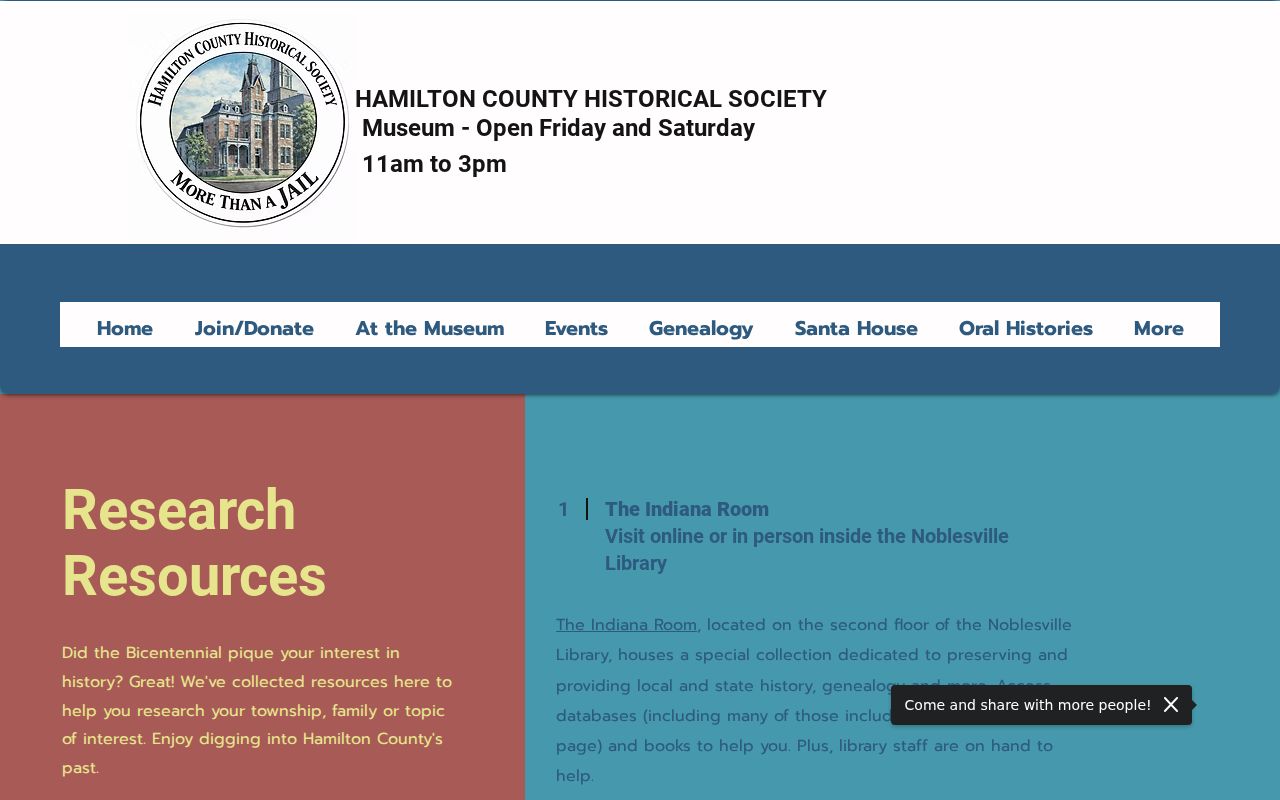
The page routes researchers to the 1825 county map, 1866 detailed map, county histories, newspapers, cemetery maps, and preservation contacts. The Society recommends beginning a house history with Crossroads, then checking directories, census records, maps, and preservation sources instead of trusting one name match.
Fishers Switch Name Fork
Local history creates a useful search rule. Fishers Switch grew near the railroad in 1872, and the post-office name changed to Fishers in 1908. Delaware and Fall Creek Townships are also core historic labels. A person could therefore appear under Fishers Switch, Fishers, a township, rural route, nearby post office, or Hamilton County alone.
| Date | Directory consequence |
|---|---|
| 1823 | County records begin before modern Fishers |
| 1872 | Search Fishers Switch and railroad references |
| 1908 | Test Fishers Switch and Fishers around the change |
| 1955–56 | Two confirmed Fishers telephone books provide a narrow local window |
| 2015 | City incorporation does not rename older records |
Keep the source’s original locality in research notes. Modernizing it too soon can create a false link between two people or hide a correct match under an older label.
Trace Fishers Families by Year
City directories work best as dated checkpoints. They can bridge decade gaps between federal census releases, while newspapers and deeds may explain a move or disappearance. Census records are open through 1950 under the 72-year rule; the 1960 census is scheduled for release in 2032.
- Search the surname and spelling variants in the closest confirmed directory year.
- Copy the entry exactly, including spouse, trade, address, symbols, title, page, and edition.
- Move one available year forward and backward, noting changes rather than assuming a continuous stay.
- Compare the address and family group with a census, obituary index, newspaper, map, or deed.
- If the name vanishes, test nearby localities and ask Crossroads about another edition, reel, or vertical file.
A city directory hit is publication-time evidence, not conclusive proof of ownership or every person in the home. For current address-keyed research, use the Fishers street directory workflow.
Maps Support Fishers Addresses
Historic maps help when streets, routes, and postal labels do not match today. HCHS identifies an 1825 county map and an 1866 detailed map. Its Sanborn list covers set years for Noblesville, Arcadia, Atlanta, and Sheridan, but no complete Fishers-specific Sanborn sequence was located.
Use a nearby-town sheet only as regional context. A sound chain moves from the printed address to the right map or plat, then to a deed legal description and later parcel evidence. Mark any bridge to a modern address as an inference until two independent sources agree.
County microfilm can extend the check beyond the city directory shelf. The State Library guide lists Hamilton County deeds from 1825, marriages from 1833, estates from 1829, probate from 1822, and Circuit Court records from 1823. These record types answer distinct questions. A deed identifies parties to an instrument, while probate can explain an estate transition and a marriage record documents a licensed event. None should be relabeled as a household list.
Access also differs by source. Indiana Memory supplies page scans online, HEPL offers databases and staff help, the State Library holds printed or filmed volumes, and HCHS provides its own research channels. When a city directory search fails online, call or visit the keeper instead of assuming the name was never printed. Give staff a name variant, date range, township or postal label, and any known address. That compact request is more useful than asking for every record about a person.
A name often becomes clear only after it is paired with another local source. Crossroads keeps obituary indexes, newspaper microfilm, cemetery listings, yearbooks, plat maps, photographs, and vertical files. Its licensed databases add newspapers and family-history collections, but availability depends on whether the search happens in a branch or through a cardholder login. Ask which access mode applies before planning a remote session.
The Historical Society adds oral histories, local histories, original-purchaser maps, and preservation referrals. Its house-history workflow points to the Library of Congress Sanborn collection, Indiana DNR SHAARD, Indiana Landmarks, census schedules from 1850 forward, and local preservation contacts. No full online Fishers cemetery index was located, so Highland Cemetery and the Osborn family graveyard at Ritchey Woods remain research leads rather than searchable resident rolls.
Each source answers a narrow question. A yearbook can connect a student with a school year. An obituary can tie relatives to a death date. A plat can place a road or tract. A city directory supplies a dated name-and-address clue. Look for agreement in spelling, age, family, trade, and chronology. Two records that merely share a name are not enough.
For a printed volume, save its full title, publisher, edition year, repository, call number, page, and abbreviation key. For Indiana Memory, retain both the parent directory object and page object because the collection is compound. Compare OCR with the image and quote the scan when they disagree. For staff-assisted research, note the branch, collection, database or reel, consultation date, and any limits staff identified. A negative catalog search does not prove the volume, person, or address never existed.